From Tablets to Computers: First Computer Labs installed in ward secondary schools of Iringa - Funded by Capital Group

In June 2019, Lyra received funding support from Capital Group for installation of 19 Computers in a rural based secondary school in Iringa. Lyra used the support to benefit two schools, each with 11 computers impacting 741 students and 50 teachers. These are the very first Computer Labs installed by Lyra since the beginning of Lyra’s Digital Learning program in January 2017. They are also the very first computers that all students, and the majority of teachers have ever seen, or used.

Desktops will enable students to achieve a better grasp of handling a proper computer, a skill that is highly relevant in today’s labour market.

The Computers bring a transformation in learning, with a high increase in usage among students and teachers immediately after installation. The program included five days training to all teachers by Camara Education in basic computing, MS Office, Classroom teaching, management and monitoring.

Historically, the digital learning project was introduced as a pilot in January 2017 in 3 partner schools (Lundamatwe, Mazombe and Madege Secondary Schools), and 3 Lyra coaches were trained to introduce, supervise and support teachers and students on digital learning (DL).

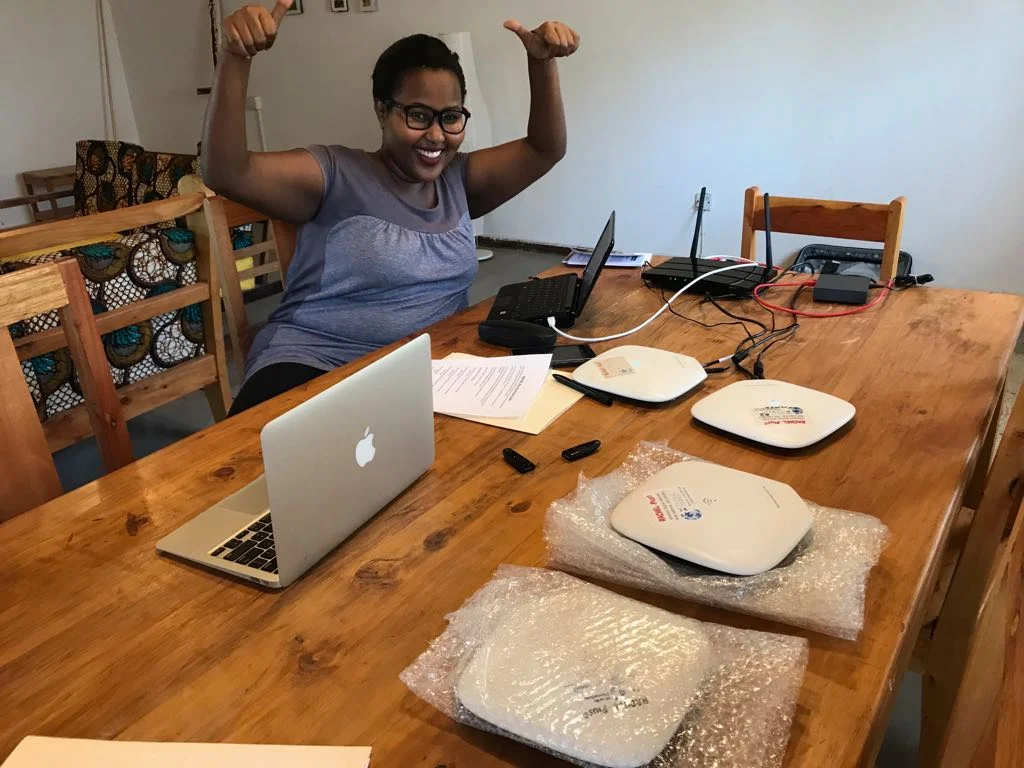
We started the project with 90 tablets that were distributed to the 3 schools, 30 per school. Lyra introduced e-learning using resources available through ‘RACHEL’ (Remote Access Community Hotspot Educational Learning), a hot spot device containing different educational material of all levels of studying. The server enables students to access materials offline and is the perfect solution in rural schools with limitations in electricity and connectivity. The material is also suitable for teachers, as a vast amount of supplementary educational resources is available including content by Khan Academy (KA Lite). To improve the program further, In July 2018, Lyra partnered with Shule Direct for provision of Tanzania based Curricula content (notes and quizzes) for five core Science subjects, leading to increased usage in Digital learning.

With growing number of students per class, sharing of a tablet continues to be challenge, making it difficult for each child to handle the tablet on a daily basis (see photos). The ideal number of tablets per school is 50 -60, so that at least every student in a class could have a personal tablet. The alternative is to install computer desktops to leverage the Digital Learning platform throughout the day. Installing computer labs require main grid electricity and can therefore only be introduced in schools with electricity. Prior to the Capital Group funded computer labs being installed in Q4 2019, both schools had 20 tablets each.

Picture 2.png

Following installation of the Computers at the Lulanzi and Nyang’oro Secondary Schools, there was a significant rise in usage by both students in hostel and others, while hostelers have the biggest benefit.

The significant increase in use from installation in Q4 2019, in the number of students using Shule Direct is also

evident in the usage data from the hostel.

Picture 1.png

Beni Hamis Mwakafwila, a Civics and Kiswahili Teacher at Nyang’oro secondary school says:

“First of all I would like to thank Lyra in Africa for installing a Computer lab in our School, and I am so happy to hear that this is the first lab to be installed by Lyra. Also, I would like to thank Lyra for the training that they have provide to us teachers. For me before the training, I was using computers for leisure, however after the training I came to realize that there were a lot things which I had no idea of.

I bought my computer soon after being employed for sure it was my desire to know how to use it effectively but instead, I was using it to watch movies. My computer eventually collapsed. I saw my fellow teachers typing exams and arranging their examination results. I was envious and desired to do the same, but failed because I lacked computer skills.

I am so thankful that I have received free computer training. Before installation of computer lab materials, the tablets had Tanzanian Science subjects only, discouraging the rest of us Art teachers to use digital equipment. But with the Computer Lab, all the subjects are there, and I am happy that I can see all the notes needed for teaching and learning. I was so excited when I saw ‘Ngoswe penzi kitovu cha uzembe’ notes in which for me was a big surprise.

I am very interested in using the class management tool (veyon) installed for teaching because it makes students to love the class and session very well and it makes my work a lot easier and fun.”

Tanzanian girls' education icon, Dr Maria Kamm joins Lyra

Dr. Maria Kamm, an icon in the education sector in Tanzania and beyond, joins Lyra in Africa as Honorary Member and Patron

By Roselyne Mariki, Lyra Tanzania National Director

blob

It was one of my greatest moments, when Dr. Maria Josephine Kamm accepted our request to join the Lyra Tanzania Board as Honorary Member and become the very first Patron. I’m one of many who call her ‘Mama’, a person who shaped the education of thousands of girls over a four-year period of lower Secondary Education. She was the larger-than-life headmistress of the Moshi-based Weruweru Girls’ Secondary School from 1970 to 1992. To-date she still treats all of us as her daughters.

Roselyne Mariki, Lyra National Director, and Weruweru alumni

So how does one describe Mama Kamm? While it’s impossible to capture her journey, it is notable that she is and started her life from a humble beginning, born in rural Iringa in June 1937. She attended Tosamaganga Girls School (Iringa), Loleza Girls (Mbeya) and later Kilakala Secondary School (Morogoro). Her foundation in education was built in Tanzania, and in her later years she studied at St. Mary Notre Dame, Indiana and Syracuse University NYC for her Masters’ degree.

She started teaching in 1965 at a number of Secondary Schools and later at Weruweru Girls - Tanzania's top school for girls under her 22-year leadership - where she inspired and motivated thousands of girls who have later become very successful women in different fields. She is a strong believer of combining classroom teaching with entrepreneurial skills building (self-reliance spirit), and all girls who passed under her leadership have and continue to achieve both. She retired in 1992 after registering the Mama Clementina Foundation to help educate young girls who became pregnant while at school.

Mama Kamm, has a record of breaking down barriers so that girls, especially those less-privileged, get a valuable education. Her name has been engraved on the plaque containing the history of the struggle of girls in Tanzania, in the last five decades.

Mama Kamm was deeply inspired by the educational philosophies of Julius Nyerere, Tanzania’s first President, known affectionately by Tanzanians as ‘teacher’- Mwalimu. Mama Maria Kamm founded the Mwalimu Nyerere Foundation in honour of Mwalimu’s great legacy. She is a beneficiary to many awards both in and outside the borders of Tanzania.

A mother, a teacher, a politician, a businesswoman and a philanthropist, she is a shining example of a true Tanzanian woman achiever. It is a great pleasure to Lyra in Africa to have such an iconic woman, a driver of education in Tanzania, as part of our team. We welcome you Mama on behalf of all the girls in Iringa and Tanzania whose lives you continue to touch. -

New hostel at Mlowa Secondary School promotes wildlife conservation

The commissioning of Mlowa Girls’ Hostel was a highlight for Lyra in March 2019. Located in the largest Wildlife Management Area in Tanzania, Mlowa Secondary School has 446 students. 80% are from Maasai Pastoralist families spread out across Ruaha National Park. Some children have to walk up to 24kms a day to reach school. The distance, and the risks that they face en route, means that there is a high dropout rate, especially from girls who encounter challenges like sexual advances and attacks on their walk to school.

The Mlowa hostel was badly damaged by fire in 2017

The Mlowa hostel was badly damaged by fire in 2017

After a fire destroyed the hostel in 2017, Lyra has completely refurbished it, with the generous support of the Infinity Foundation. Currently housing 92 girls, Mlowa hostel is our 10th hostel. We are delighted that nearly 1,000 girls now have safe places to live while they study for the education they deserve.


Tumaini Mbepati, 17, was ready to drop out of secondary education when a motorcycle driver made sexual advances toward her. She believed that being with him was the best option for her future.

Tumaini.jpg

 “I thank my parents, community leaders and school management, for rescuing me from what would have been the worst decision of my life. I am now back in school and I live in the hostel. I am studying very hard to ensure that I pass my final exams and make a difference to my society, and also to be a leading example to other girls. My plea to parents is to bring their children to stay in hostel. It is safe, there is a lot of time to study, and it helps us not to be exposed to the daily challenges as we walk to and from school every day. Thank you so much to Lyra for restoring this hostel – we now have a safe space place to live and study. I now love studying, I love this hostel.

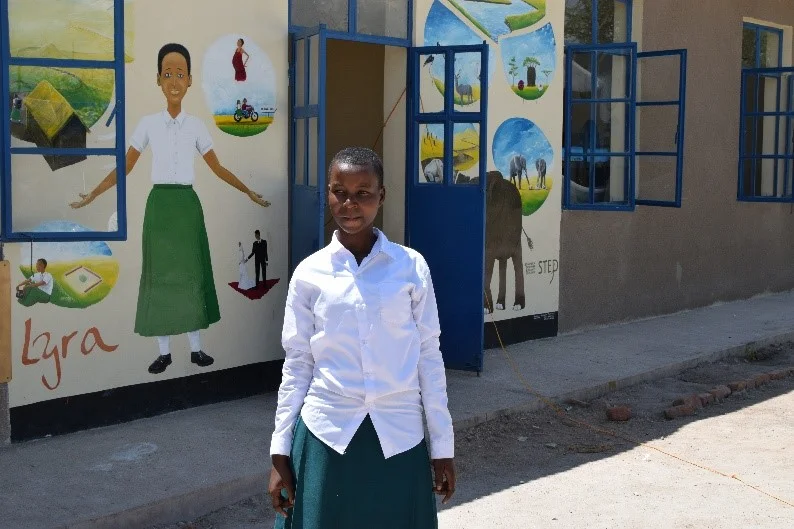
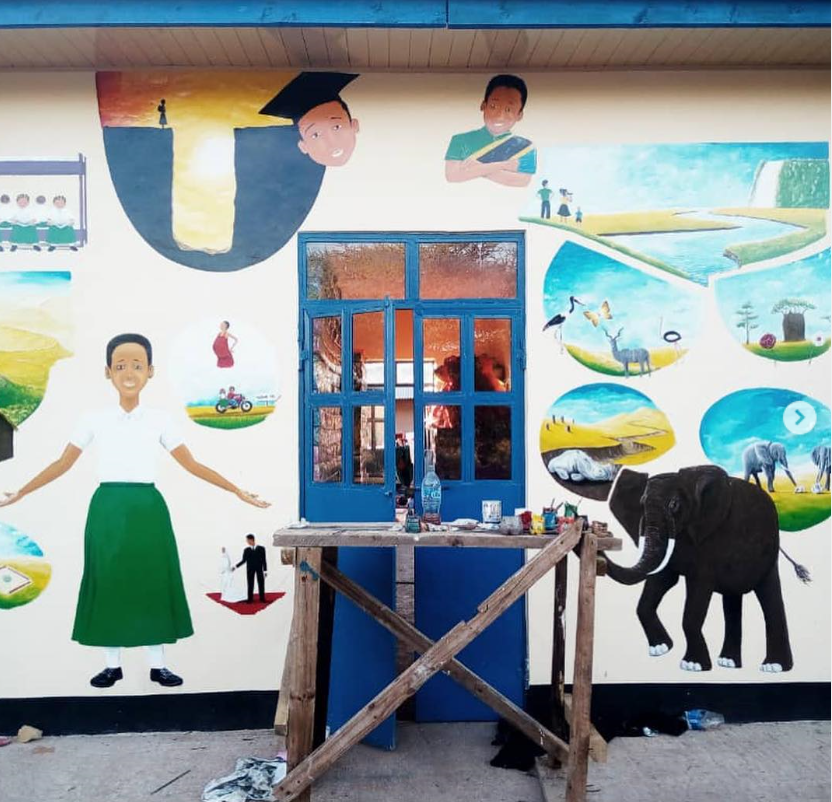
Lyra is introducing Digital Learning to Mlowa secondary school too. Teachers and students will benefit from the world-class educational resources available through ‘Rachel’ (Remote Access Community Hotspot Educational Learning). Also, in partnership with Southern Tanzania Elephant Programme (STEP), Lyra is working to lessen wildlife and community conflict by engaging students with conservation of the land and animals around them. The beautiful mural painted on Mlowa hostel’s wall was collaboratively drawn by a local artist and the girls, to inspire the community to celebrate their rich wildlife heritage.

Building a hostel always amounts to more than the bricks of a building. Mlowa Girls’ Hostel is another example of a community expressing their commitment to girls’ education and a better future for their children.